Where Does a Memoir Begin?
A memoir doesn't begin at your birth. It begins at the moment something broke — the one scene that holds the whole book in miniature.
Not at the day you were born. That is the first thing to get wrong, and almost everyone gets it wrong.
The Birthday Instinct
You sit down to write your life. You open the document. You type the year you were born and the town you were born in, and you start marching forward. Birth, then grade school, then the first job, in order, the way a historian would reconstruct a stranger.
By the time you reach your twenties you are exhausted, and the pages are flat, because you have been transcribing a timeline instead of telling a story. The project dies in the third decade. It always dies in the third decade.
The order you capture your memories in does not matter — I have written before about emptying the shoebox onto the floor and letting the machine rebuild the chronology behind you. That problem is solved. But capture order is not the same question as where the book begins. Where you start recording is logistics. Where the reader walks in is craft. This is the craft one.
Find the Scene Where the Trouble Starts
A memoir does not begin at birth. It begins at the moment the trouble starts.
Think about the story you actually tell people — out loud, at the table, when someone asks how you ended up here. You do not start at the maternity ward. You start in the middle. “So I had just lost the house, and the phone rings…” You start in medias res, in the middle of things, because that is where the energy is. The listener leans in because something is already on fire.
Your book wants the same opening. Not the beginning of your life — the beginning of the trouble. The night the marriage cracked. The diagnosis. The letter. The phone call you can still hear. Find the moment something broke, and start the reader there, before you have explained anything. The explaining comes later, and it comes easier, because now the reader is already leaning in.
One Scene Holds the Whole Book
Here is the part that feels like a trick but is just structure: the right opening scene contains the entire book in miniature.
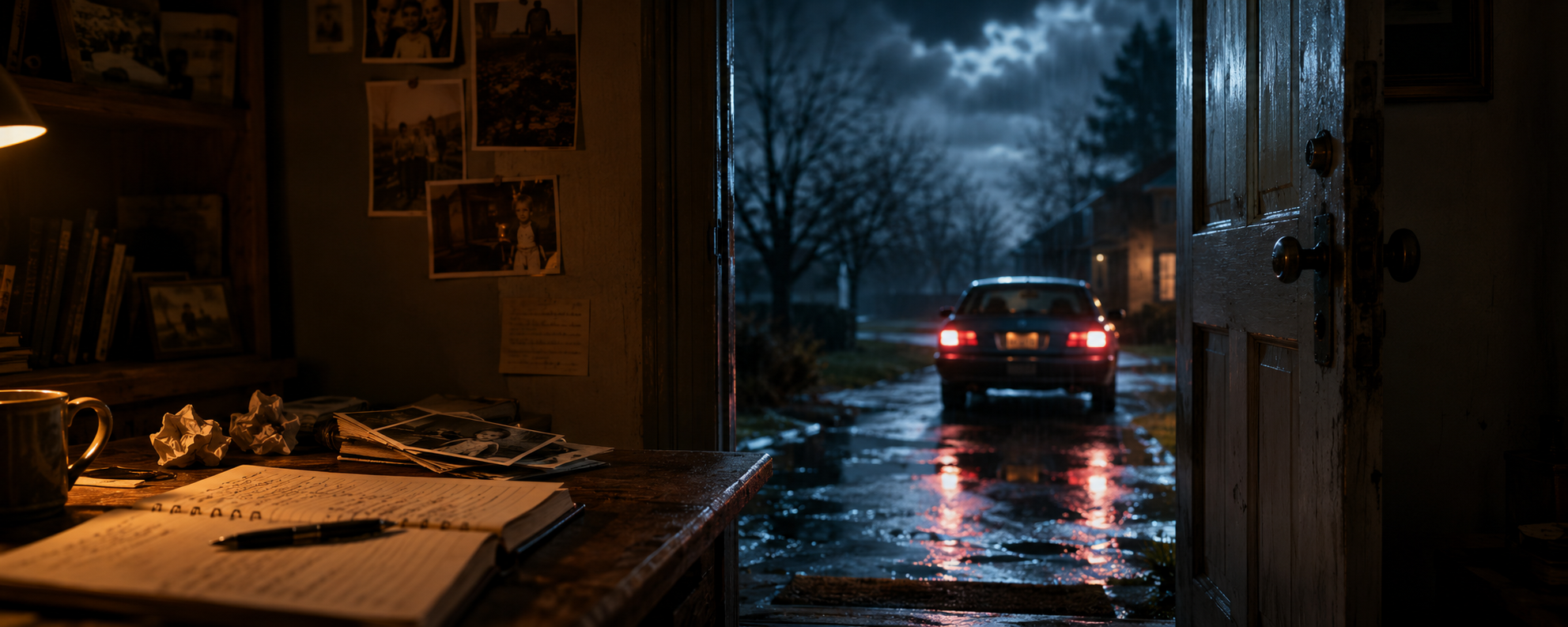
The night you stood in the driveway with the engine running and could not decide whether to go back inside — that scene already holds the marriage, the fear, the loyalty, the version of you that stayed too long. You do not have to summarize forty years to open the book. You have to find the one scene where forty years are already pressing against the walls, and you open the door on it.
That is the load-bearing scene. Every memoir has one, usually three or four. The work of starting is not writing more. It is finding which single memory is carrying the weight of all the others, and trusting it to hold the front door.
You Don’t Have to Find It Alone
Finding the load-bearing scene is hard to do by yourself, because the scenes that carry the most weight are usually the ones you have trained yourself not to look at directly.
This is the exact problem PureTome’s Socratic engine is built for. It does not hand you a blank page and a writing prompt about your childhood. It asks you why a moment mattered — and keeps asking, gently, until the real scene surfaces, the one underneath the one you offered. The Neo4j Context Engine running behind it means you can open anywhere, jump anywhere, and never lose the thread; the system holds the chronology so you can chase the heat instead.
You bring the moment that still has a charge on it. The machine helps you find out why, and where the book actually starts.
Stop Looking for the Beginning
There is no beginning to find. There is only the scene you have been circling — the one you would tell a stranger first if they asked how you got here.
Start there. Open the door on the moment something broke, and let the rest of the life arrange itself behind it.
Get new essays by email
Memoir craft, AI architecture, and system design. No spam, unsubscribe anytime.